

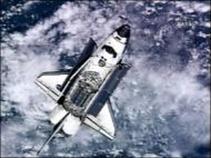
Atlantis delivers space lab
| ||||
| ||||
|
|





|
News Team |
PUBLICAT DUMINICĂ, 10 FEBRUARIE 2008, ora 11:09
CAPE CANAVERAL, Fla. — Space shuttle Atlantis and its astronauts delivered a sparkling new lab to the international space station Saturday, but had to delay installing it by a day because of a crew member's medical problem.
One of the two spacewalking astronauts who was to help install the $2 billion European science lab, Columbus, was pulled from the job because of a non-life-threatening condition. The installation won't take place now until Monday.
NASA officials would not say why German astronaut Hans Schlegel was being replaced, but Atlantis' commander, Stephen Frick, requested a private medical conference with flight surgeons shortly after reaching the space station.
"I will just say it's not going to impact any of the objectives of this mission," said John Shannon, chairman of the mission management team. "It will cause us to rearrange a few activities."
Shannon refused to elaborate, citing medical privacy, but noted that it was not a life-threatening condition. When asked by another reporter if it was contagious, he said: "You guys can fish all day, but I won't bite."
Schlegel, 56, a two-time space flier, did not appear to be sick when he floated inside the space station and took part in a safety briefing, but he seemed quiet. He was seen on camera for only several minutes.
Schlegel was supposed to venture outside with American Rex Walheim on the first two of three planned spacewalks. His status on the second spacewalk, on Wednesday, was still uncertain.
The Columbus lab should have been unloaded from Atlantis and attached to the space station on Sunday, with two spacewalkers outside to help. Mission Control informed the astronauts about the delay just a few hours after the shuttle and the station joined up.
NASA said Schlegel's shuttle crewmate, American Stanley Love, would take his place. Love trained for the work as a backup, just in case, and already was assigned to the mission's third spacewalk, along with Walheim.
It was a rare and unsettling change in plans for NASA, which typically prepares for every aspect of a shuttle mission — particularly spacewalks — for months and even years.
The last time a shuttle astronaut's health drastically affected flight operations was in 1990; Atlantis' commander caught a cold, and the launch had to be delayed. And in 1982, an astronaut's space motion sickness — a common affliction — delayed the first shuttle spacewalk, which ultimately was canceled because of suit problems.
The delay in installing Columbus and carrying out the first spacewalk prompted NASA to add a 12th day to the mission. Yet another day could be added; NASA had hoped to spend an extra day at the space station to help set up Columbus. Atlantis will remain at the orbiting complex until at least next weekend.
NASA, meanwhile, was analyzing a small tear in one of Atlantis' thermal blankets.
Before pulling up to the space station, Atlantis did a 360-degree backflip so the crew aboard the complex could photograph the shuttle's thermal shielding. Nearly 300 photos were beamed back to Earth so engineers could look for any signs of launch damage.
Mission Control requested extra pictures of the torn thermal blanket on Atlantis' right orbital maneuvering system pod, back near the tail. The small tear, along a seam, occurred during Thursday's launch and was discovered Friday, said flight director Mike Sarafin.
Engineers were trying to ascertain whether the tear posed a hazard for re-entry at flight's end. The exact size of the peeled-up section was unknown, but it appeared to be smaller and less worrisome than one that required spacewalking repairs last June. Coincidentally, that tear was in a blanket on Atlantis' left orbital maneuvering system pod.
"It's probably not that big of an issue, but we're off looking at it," Sarafin said.
The photos of the shuttle's thermal shielding tiles are standard procedure, ever since the destruction of Columbia in 2003. Columbia's wing was gashed at liftoff by a chunk of fuel-tank insulating foam. Only a small amount of foam is believed to have come off Atlantis' tank, and none of it appeared to seriously damage the shuttle.
Space station astronaut Daniel Tani, in orbit for nearly four months, wasted no time swapping places with newly arrived Frenchman Leopold Eyharts. The two formally exchanged spacecraft seats late Saturday, a day early. Tani will return to Earth aboard the shuttle, leaving Eyharts behind.
As for the Columbus lab, its delayed installation was just another bump in the road for the European Space Agency.
The original plan called for Columbus to be launched in 1992 to mark the 500th anniversary of Christopher Columbus' voyage to the New World. But years passed as NASA redesigned the space station. Then station construction ended up being stalled, and then the shuttle fleet was grounded for 2 1/2 years following the Columbia tragedy.

Sick astronaut delays first Atlantis spacewalk, mission by 24 hours
A sick German astronaut has delayed by 24 hours a spacewalk that had been set for Sunday to attach the European-made Columbus laboratory to the orbiting International Space Station, a NASA spokesman said.
Just after the shuttle Atlantis docked with the ISS, mission chief John Shannon told reporters German astronaut Hans Schlagel, one of the Atlantis' crew of seven, was unwell, without giving details.
"We will delay the EVA (Extra Vehicular Activity, or spacewalk) by one day and Hans Schlegel will be excused," he said.
"It's a private medical matter," Shannon added. "I won't say more ... It's not life threatening."
He said the 11-day mission of the shuttle Atlantis would also be extended by one day, with return to Earth set for February 19.
Schlagel will be replaced by US astronaut Stanley Love on the spacewalk which has been delayed until Monday, Shannon said.
His illness, the spokesman said, is "not going to impact any of the objectives of the mission," adding that Schlagel will still take part in the second spacewalk of the mission -- now rescheduled for Wednesday -- with US astronaut Rex Walheim.
A European Space Agency official who asked not to be identified said Schlagel's illness was "nothing serious." Images of Atlantis astronauts boarding the ISS showed a seemingly normal Schagel moving a little slower than his colleagues.
The Atlantis' third spacewalk by Walheim and Love has also been rescheduled, NASA said.
Before announcing the spacewalk delay, Shannon Sarafin said two minor techincal glitches had been detected on the Atlantis. One of three navigational computers had failed -- posing no threat to the mission, he said -- and was about to be fixed.
The other glitch, he added, was a small tear in the shuttle's thermal blanket that appeared to be minor.
The announcements came a few hours after the Atlantis docked with the ISS on Saturday and the hatches between the two spacecrafts were opened allowing the visiting astronauts to be greeted by their three ISS colleagues.
The Atlantis mission to deliver the 10-tonne Columbus laboratory is marking a milestone in Europe's role in space.
Columbus, the first ISS addition not made in the United States or Russia, will be used for biotechnology and medicine experiments involving microgravity. It cost some 1.3 billion euros (two billion dollars), paid mostly by Germany, Italy and France.
Astronauts will use the ISS's robotic arm to transfer Columbus out of the shuttle's payload bay and attach it to the station.
On their first day in orbit Friday the Atlantis crew trained a high-definition camera mounted on the shuttle's robotic arm on the spaceship's thermal shield to search for any damage that may have occurred during liftoff.
Shannon said three small foam losses from the shuttle's external fuel tank were filmed in the minutes after liftoff Thursday, one of which may have struck the shuttle's thermal shield without, however, causing any apparent damage.
Examining the shuttle's heat shield became established procedure after the February 2003 shuttle Columbia disaster. A piece of foam insulation broke off during Columbia's liftoff, damaging the shuttle's external heat tiles and leading to the craft's destruction when it re-entered the Earth's atmosphere killing seven astronauts.
Besides Schlagel, the Atlantis crew includes astronaut Leopold Eyharts of France. Currently US and Russian astronauts are aboard the space station.
Eyharts will begin Europe's second longest stay on the space station by replacing US astronaut Dan Tani. The German astronaut of the European Space Agency, Thomas Reiter, stayed six months in the station in 2006.
Atlantis was originally scheduled for blastoff on December 6 as part of the tight schedule of shuttle flights to complete ISS construction by 2010, when the three-craft US shuttle fleet is to be retired.
But malfunctioning circuits in the fuel gauges of the spacecraft's liquid hydrogen tank forced a two-month delay until the problem was fixed.
One of the two spacewalking astronauts who was to help install the $2 billion European science lab, Columbus, was pulled from the job because of a non-life-threatening condition. The installation won't take place now until Monday.
NASA officials would not say why German astronaut Hans Schlegel was being replaced, but Atlantis' commander, Stephen Frick, requested a private medical conference with flight surgeons shortly after reaching the space station.
"I will just say it's not going to impact any of the objectives of this mission," said John Shannon, chairman of the mission management team. "It will cause us to rearrange a few activities."
Shannon refused to elaborate, citing medical privacy, but noted that it was not a life-threatening condition. When asked by another reporter if it was contagious, he said: "You guys can fish all day, but I won't bite."
Schlegel, 56, a two-time space flier, did not appear to be sick when he floated inside the space station and took part in a safety briefing, but he seemed quiet. He was seen on camera for only several minutes.
Schlegel was supposed to venture outside with American Rex Walheim on the first two of three planned spacewalks. His status on the second spacewalk, on Wednesday, was still uncertain.
The Columbus lab should have been unloaded from Atlantis and attached to the space station on Sunday, with two spacewalkers outside to help. Mission Control informed the astronauts about the delay just a few hours after the shuttle and the station joined up.
NASA said Schlegel's shuttle crewmate, American Stanley Love, would take his place. Love trained for the work as a backup, just in case, and already was assigned to the mission's third spacewalk, along with Walheim.
It was a rare and unsettling change in plans for NASA, which typically prepares for every aspect of a shuttle mission — particularly spacewalks — for months and even years.
The last time a shuttle astronaut's health drastically affected flight operations was in 1990; Atlantis' commander caught a cold, and the launch had to be delayed. And in 1982, an astronaut's space motion sickness — a common affliction — delayed the first shuttle spacewalk, which ultimately was canceled because of suit problems.
The delay in installing Columbus and carrying out the first spacewalk prompted NASA to add a 12th day to the mission. Yet another day could be added; NASA had hoped to spend an extra day at the space station to help set up Columbus. Atlantis will remain at the orbiting complex until at least next weekend.
NASA, meanwhile, was analyzing a small tear in one of Atlantis' thermal blankets.
Before pulling up to the space station, Atlantis did a 360-degree backflip so the crew aboard the complex could photograph the shuttle's thermal shielding. Nearly 300 photos were beamed back to Earth so engineers could look for any signs of launch damage.
Mission Control requested extra pictures of the torn thermal blanket on Atlantis' right orbital maneuvering system pod, back near the tail. The small tear, along a seam, occurred during Thursday's launch and was discovered Friday, said flight director Mike Sarafin.
Engineers were trying to ascertain whether the tear posed a hazard for re-entry at flight's end. The exact size of the peeled-up section was unknown, but it appeared to be smaller and less worrisome than one that required spacewalking repairs last June. Coincidentally, that tear was in a blanket on Atlantis' left orbital maneuvering system pod.
"It's probably not that big of an issue, but we're off looking at it," Sarafin said.
The photos of the shuttle's thermal shielding tiles are standard procedure, ever since the destruction of Columbia in 2003. Columbia's wing was gashed at liftoff by a chunk of fuel-tank insulating foam. Only a small amount of foam is believed to have come off Atlantis' tank, and none of it appeared to seriously damage the shuttle.
Space station astronaut Daniel Tani, in orbit for nearly four months, wasted no time swapping places with newly arrived Frenchman Leopold Eyharts. The two formally exchanged spacecraft seats late Saturday, a day early. Tani will return to Earth aboard the shuttle, leaving Eyharts behind.
As for the Columbus lab, its delayed installation was just another bump in the road for the European Space Agency.
The original plan called for Columbus to be launched in 1992 to mark the 500th anniversary of Christopher Columbus' voyage to the New World. But years passed as NASA redesigned the space station. Then station construction ended up being stalled, and then the shuttle fleet was grounded for 2 1/2 years following the Columbia tragedy.
Sick astronaut delays first Atlantis spacewalk, mission by 24 hours
A sick German astronaut has delayed by 24 hours a spacewalk that had been set for Sunday to attach the European-made Columbus laboratory to the orbiting International Space Station, a NASA spokesman said.
Just after the shuttle Atlantis docked with the ISS, mission chief John Shannon told reporters German astronaut Hans Schlagel, one of the Atlantis' crew of seven, was unwell, without giving details.
"We will delay the EVA (Extra Vehicular Activity, or spacewalk) by one day and Hans Schlegel will be excused," he said.
"It's a private medical matter," Shannon added. "I won't say more ... It's not life threatening."
He said the 11-day mission of the shuttle Atlantis would also be extended by one day, with return to Earth set for February 19.
Schlagel will be replaced by US astronaut Stanley Love on the spacewalk which has been delayed until Monday, Shannon said.
His illness, the spokesman said, is "not going to impact any of the objectives of the mission," adding that Schlagel will still take part in the second spacewalk of the mission -- now rescheduled for Wednesday -- with US astronaut Rex Walheim.
A European Space Agency official who asked not to be identified said Schlagel's illness was "nothing serious." Images of Atlantis astronauts boarding the ISS showed a seemingly normal Schagel moving a little slower than his colleagues.
The Atlantis' third spacewalk by Walheim and Love has also been rescheduled, NASA said.
Before announcing the spacewalk delay, Shannon Sarafin said two minor techincal glitches had been detected on the Atlantis. One of three navigational computers had failed -- posing no threat to the mission, he said -- and was about to be fixed.
The other glitch, he added, was a small tear in the shuttle's thermal blanket that appeared to be minor.
The announcements came a few hours after the Atlantis docked with the ISS on Saturday and the hatches between the two spacecrafts were opened allowing the visiting astronauts to be greeted by their three ISS colleagues.
The Atlantis mission to deliver the 10-tonne Columbus laboratory is marking a milestone in Europe's role in space.
Columbus, the first ISS addition not made in the United States or Russia, will be used for biotechnology and medicine experiments involving microgravity. It cost some 1.3 billion euros (two billion dollars), paid mostly by Germany, Italy and France.
Astronauts will use the ISS's robotic arm to transfer Columbus out of the shuttle's payload bay and attach it to the station.
On their first day in orbit Friday the Atlantis crew trained a high-definition camera mounted on the shuttle's robotic arm on the spaceship's thermal shield to search for any damage that may have occurred during liftoff.
Shannon said three small foam losses from the shuttle's external fuel tank were filmed in the minutes after liftoff Thursday, one of which may have struck the shuttle's thermal shield without, however, causing any apparent damage.
Examining the shuttle's heat shield became established procedure after the February 2003 shuttle Columbia disaster. A piece of foam insulation broke off during Columbia's liftoff, damaging the shuttle's external heat tiles and leading to the craft's destruction when it re-entered the Earth's atmosphere killing seven astronauts.
Besides Schlagel, the Atlantis crew includes astronaut Leopold Eyharts of France. Currently US and Russian astronauts are aboard the space station.
Eyharts will begin Europe's second longest stay on the space station by replacing US astronaut Dan Tani. The German astronaut of the European Space Agency, Thomas Reiter, stayed six months in the station in 2006.
Atlantis was originally scheduled for blastoff on December 6 as part of the tight schedule of shuttle flights to complete ISS construction by 2010, when the three-craft US shuttle fleet is to be retired.
But malfunctioning circuits in the fuel gauges of the spacecraft's liquid hydrogen tank forced a two-month delay until the problem was fixed.
© Copyright News Team